Ghost Invasion: Idle Hunter
- 4.8
- Rating
- 1.00M
- Installs
- Free
- Price

 Analysis by App-foxy
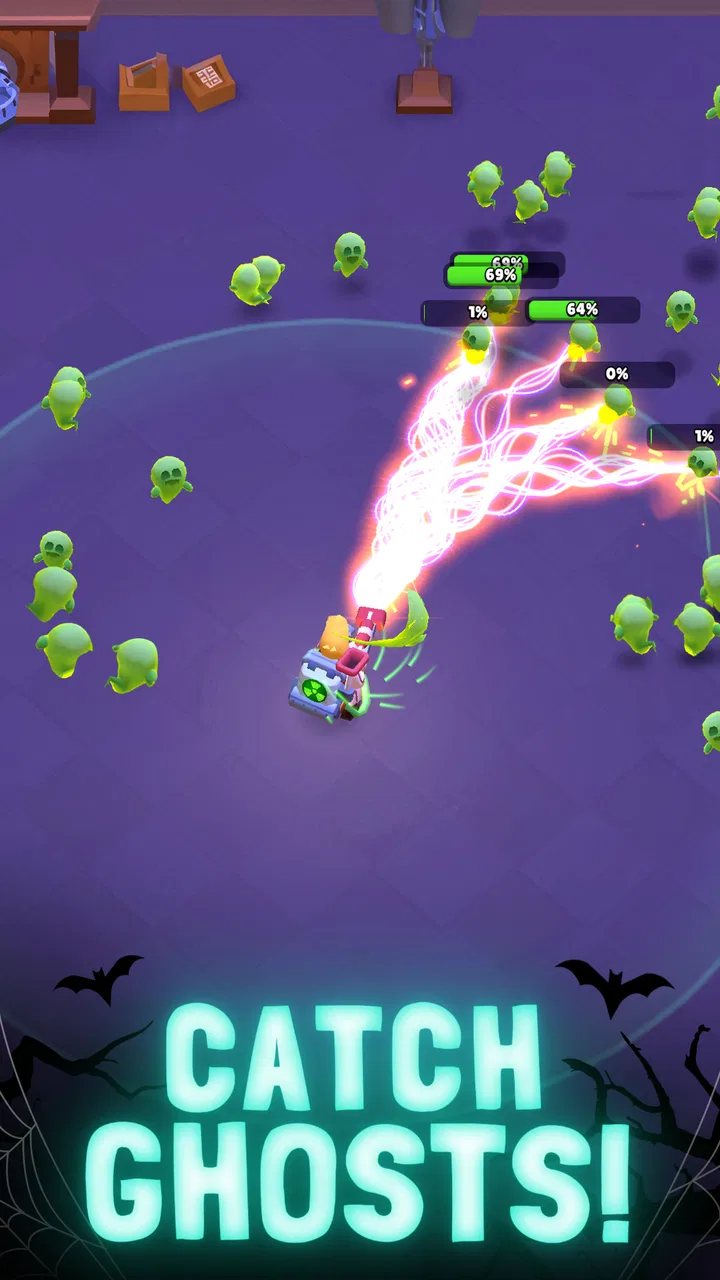
I went into Ghost Invasion: Idle Hunter expecting a quick arcade distraction, but its mix of automatic progression, monster shooting, and RPG-style upgrades gives it a more persistent rhythm than a traditional score-chasing game. It is built for short sessions: you enter a haunted fight, make decisions about improvements, watch your hunter clear enemies, and return later to continue developing the character. That makes it easy to pick up when I have only a few minutes, although it also means the game is not aimed at players who want constant, highly precise action.
Miniclip.com presents this as a free arcade game with an Everyone age rating. It has already attracted over one million installs and holds a 4.8 average from around fifty-eight thousand ratings, which suggests that its simple loop has connected with a broad audience. I would describe it as a casual idle shooter with RPG decoration rather than a deep role-playing game. The shooting gives each session energy, while the idle structure handles much of the repetition in the background.
How the current version feels to play
The central appeal is the contrast between immediate action and gradual growth. Ghosts and monsters appear as the short-term problem, while character improvement is the long-term reason to keep returning. I like that combination because it gives even a brief session a clear purpose: I am not simply clearing enemies; I am trying to make the next encounter easier, faster, or more rewarding.
You May Also Like

 Blood Strike: 2.5 Anniversary
Blood Strike’s Loadouts Turn Every Drop Into a Tactical Gamble
A close look at Blood Strike’s custom loadouts: how fast access to signature weapons reshapes its battle royale rhythm, rewards preparation, and narrows the gap between fights.

 Pandora - Music & Podcasts
Pandora’s Music Is Easy to Start, but Harder to Recover
Pandora’s strength is its low-effort path from a seed to a station. Its weak spot is how much confidence it asks you to place in connection, setup, and quiet recovery.

 8 Ball Pool
 Is Built on Rivalries, Rematches, and Routine
A close look at the rivalries, rematches, shared routines, and unanswered safety questions that turn a quick pool match into a persistent mobile community.

 Samsung Music
’s Quiet Strength Is Playing What You Already Own
Its reach comes less from spectacle than from dependable access to a personal library. That simplicity is both the app’s strongest retention engine and its ceiling.

 AccuWeather: Weather Radar
AccuWeather Review: A Quick, Clear Forecast for Everyday Decisions
For everyday plans, the best forecast is the one you can understand quickly. AccuWeather makes rain timing, radar, and local conditions easy to act on, with a few trade-offs.

 Hill Climb Racing
Why Hill Climb Racing Still Turns Crashes Into One More Run
A tiny car, a bumpy hill and one more upgrade: Hill Climb Racing keeps resurfacing because its simple chaos makes every near-miss feel personal.
More From Our News Desk
View All News


The idle design is particularly useful for players who dislike starting from zero every time they open a game. Instead of demanding a long uninterrupted run, it allows progress to fit around ordinary routines. A realistic use case is a commute or a lunch break: I can open the game, handle the available upgrades, play for a while, and close it without feeling that I have abandoned a complicated campaign. Later, the return visit still feels connected to the previous one.
That convenience comes with a trade-off. Idle games can make progress feel less personal than skill-based arcade titles. If you prefer to win mainly through reflexes, positioning, and perfect timing, this may feel too automated. The shooting theme gives the game a lively surface, but the deeper decision-making is about managing growth and choosing where to put attention rather than mastering every enemy pattern.
The best way to approach it is as a compact progression game, not as a replacement for a full action RPG. I would not install it expecting a large narrative, elaborate exploration, or the same mechanical depth as a premium console-style adventure. Its strength is the repeatable loop: fight, improve, return, and push a little farther.
What the RPG layer adds
The RPG element matters because it gives the arcade encounters a sense of continuity. A normal arcade game can lose its appeal once the novelty of the first few rounds fades. Here, the promise of a stronger hunter creates a reason to revisit familiar action. Even when I am not chasing a personal high score, I have a practical goal in mind: make the next group of monsters more manageable.
For new players, I recommend resisting the urge to spend every available resource immediately. In an idle game, small improvements can look equally attractive, but the useful choice is often the one that supports the way you actually play. If you open the game frequently, active combat improvements may feel more valuable. If you check in less often, upgrades that support unattended progress may better match your routine. This is one of the first meaningful trade-offs in the game, and it is easy to miss if you tap through every menu without considering your habits.
I also found that the game works better when I treat each visit as a short planning session rather than a demand to play indefinitely. I check what has changed, collect what is ready, improve the hunter, and then decide whether I want another fight. That approach keeps the idle structure from becoming background noise and makes the progression feel more deliberate.
Why the ghost theme works, and where it is limited
The ghost-hunting setting gives the game a clear identity without making it difficult to understand. Ghosts, monsters, and bosses immediately communicate the kind of obstacles I should expect, while the arcade presentation keeps the tone approachable. The Everyone rating also makes it easier to recommend to families or younger players who want a light supernatural theme rather than a harsh horror experience.
Still, players looking for genuine horror may find the theme too gentle. The haunted setting is mainly a framework for the shooting and progression systems. It does not turn the game into a tense survival experience, and I would not choose it for atmosphere alone. The appeal comes from the steady satisfaction of clearing enemies and strengthening the hunter, not from fear or suspense.
Boss encounters are important because they interrupt the ordinary flow and provide a more obvious test of progress. They also expose the limits of an idle shooter: when the underlying upgrades matter more than moment-to-moment execution, a boss can feel like a check on preparation rather than a dramatic duel. I enjoy that format when I want something relaxed, but players who want every boss to demand a new tactical solution may find the structure predictable.
What changed, who benefits, and what still deserves attention
I’d frame this section around the practical difference between a quick session and a longer commitment: the game suits players who enjoy steady progress without needing to stay focused for a long stretch. I’d also keep an eye on whether its current balance makes those short visits feel worthwhile, especially for people who prefer to play without spending. That gives returning and new players a useful way to judge what matters next.
Reading the current release in context
The game launched on October 30, 2024, and the current version is 2.1. Those details matter because they place the review in an early stage of the product’s life rather than presenting it as a finished, long-established arcade platform. I see version 2.1 as a useful snapshot of where the experience currently stands: stable enough to have built a substantial audience, but still young enough that future adjustments could noticeably affect pacing, balance, and the value of returning players’ progress.
I would be careful about interpreting the version number as proof of a particular feature set. A later version does not automatically mean a game has become deeper, more generous, or better balanced. What I can judge now is the current identity: a free-to-start idle shooting game that uses RPG progression to make repeated monster encounters worthwhile. Any future evolution should ideally strengthen that identity without turning the simple loop into a cluttered collection of menus.
For someone installing it today, the practical question is not whether it has reached some imaginary final form. It is whether the existing loop matches your preferred pace. If you like gradual improvement and short check-ins, the current build has a clear reason to exist. If you want a tightly designed arcade challenge where every second depends on your input, the idle foundation will remain a fundamental mismatch even if later updates add more content.
The effect on new and returning players
New players should find the basic idea easy to understand: the hunter attacks threats, progression makes future encounters easier, and bosses provide larger obstacles. That clarity is valuable on a phone because there is little friction between opening the game and doing something meaningful. I do not need to learn a complex control scheme before I can understand the first few minutes.
Returning players benefit most when they have a regular but not obsessive routine. A couple of brief visits can feel productive because the game is designed around ongoing growth rather than one perfect sitting. I would especially recommend it to someone who likes having a small game available while waiting for an appointment, taking a break from work, or winding down before bed.
There is a less comfortable side to that convenience. Idle progression can encourage repeated checking, and the presence of in-app purchases means the free experience exists alongside optional spending. The available purchases range from $0.99 to $119.99 per item, so I would set a personal spending limit before getting invested. The game is free to download, but “free” should not be confused with “free of monetization pressure.” Players who are easily tempted by faster progress should decide in advance whether they will spend nothing, a fixed small amount, or avoid this type of game altogether.
My own recommendation is to play through the early loop without buying anything. That gives you a clearer sense of whether the basic pacing is satisfying on its own. If the game only becomes enjoyable after reducing the wait or accelerating progress, it may not be the right match. A good idle game should still offer a pleasant routine before optional purchases enter the decision.
Three practical habits that improve the experience
First, separate active play from maintenance. When I have time, I focus on the shooting and boss attempts; when I am busy, I use the visit to review progress and make one or two thoughtful upgrades. Mixing those purposes can make the game feel slower than it really is because I am expecting an idle check-in to provide the excitement of a full session.
Second, compare upgrades by usefulness over several visits, not by the immediate number shown on the screen. An improvement that feels modest during one fight may be more valuable if it helps the hunter clear ordinary enemies consistently while I am away. This is a particularly important habit in idle games, where the best choice is not always the most dramatic-looking one.
Third, use boss attempts as progress checks rather than automatic obligations. If a boss repeatedly stops the run, I would return to ordinary encounters and strengthen the hunter before trying again. That avoids wasting time on a fight that the current build is not prepared to handle. It also turns failure into information: the obstacle is showing me that my progression choices need attention.
Where the game may fall short
The biggest limitation is the amount of control the player ultimately has over the action. The store summary calls it an idle shooting game, and that label sets the right expectation. I can make decisions around progression, but I should not expect every victory to depend on manual accuracy or fast reactions. Players who enjoy games such as traditional arcade shooters because of their demanding controls may prefer a title built around direct movement and aiming.
The second limitation is repetition. The loop is intentionally dependable, but dependable can become routine. If you need constant changes in scenery, new mechanics, or a strong narrative reason to continue, the steady cycle of fighting and upgrading may not hold your attention for long. I would choose a story-driven RPG instead when character relationships, exploration, and plot are more important than quick progression.
The third is the tension between convenience and patience. Idle systems are pleasant when they respect my time, but they can also make me aware of waiting. The more I focus on how quickly the hunter becomes stronger, the more tempting optional purchases may appear. That does not make the game unusable, but it does mean the best experience depends partly on self-control and realistic expectations about free progression.
Device compatibility is broad enough for many older phones because the minimum operating system is Android 7.1. That makes it approachable for people who are not using a recent handset. Even so, compatibility alone does not guarantee that every player will enjoy the presentation or pacing. I would still treat the game as a lightweight companion rather than a demanding showcase title.
Who should install it, and who should skip it
I would recommend it to casual players who like supernatural themes, incremental upgrades, and games that can be enjoyed in short bursts. It is also a good fit for someone who wants more structure than a simple endless shooter but less commitment than a large RPG. The combination of arcade action and idle development gives each visit a clear beginning and end.
I would be more cautious about recommending it to competitive arcade fans, story-focused RPG players, and anyone who dislikes automated progression. It is also a poor choice for people who want a completely purchase-free environment with no temptation to accelerate progress. In those cases, a premium arcade game or a more traditional skill-based shooter would probably feel cleaner and more rewarding.
The rating of Everyone makes the game broadly accessible, but age suitability is not the same as personal suitability. A younger player may enjoy the approachable monster theme, while an adult player may find the repetition too gentle. Likewise, a busy adult may appreciate the idle structure more than a teenager looking for intense action. The right audience depends less on age than on how much control and variety the player expects.
What I would watch as the game evolves
Future development should be judged by whether it improves meaningful choices rather than simply adding more things to tap. I would like to see progression remain understandable, because the current appeal depends on being able to open the game and quickly know what matters. More content would be welcome, but not if it buries the straightforward hunting loop under excessive systems.
Balance will also be important for existing players. If new updates make earlier progress feel irrelevant, long-term users may lose the satisfaction of what they have built. On the other hand, if the game becomes too generous, upgrades and boss victories could lose their purpose. The healthiest direction would preserve a sense of steady achievement while giving experienced players fresh reasons to return.
Monetization deserves equal attention. With such a wide range of optional purchase prices, the relationship between free progress and paid acceleration will strongly influence how welcoming the game feels over time. I would judge future changes by whether a patient player can enjoy the core loop without feeling constantly pushed toward spending.
After spending time with it, I see Ghost Invasion: Idle Hunter as a pleasant, focused arcade game rather than a genre-defining RPG. Its best quality is its flexibility: I can play actively for a short session or treat it as a gradual progression project between other parts of the day. Its main weakness is equally clear: the idle structure limits direct control and can make repetition and monetization more noticeable.
At version 2.1, Miniclip.com has a game that is easy to start and easy to fit into a routine. I would recommend trying the free experience with a clear spending boundary and judging the first progression cycle on its own terms. If the idea of strengthening a ghost hunter through brief shooting sessions sounds satisfying, it is worth a look. If you need deep exploration, demanding reflex gameplay, or a strong story, I would choose a different arcade or RPG alternative instead.
My final take: this is a friendly idle shooter for players who value convenience and gradual improvement more than mechanical intensity. It does not try to be everything, and that is a strength when its limits match your expectations. For the right player, the simple routine is exactly what makes it easy to keep coming back.
FAQs for Ghost Invasion: Idle Hunter
01What is the main objective of Ghost Invasion: Idle Hunter?
Ghost Invasion: Idle Hunter is an engaging idle game where players take on the role of a ghost hunter, capturing spirits that have invaded various locations. The main objective is to upgrade your equipment, recruit skilled hunters, and strategically manage resources to maximize ghost-catching efficiency and progress through increasingly challenging levels.
02Is Ghost Invasion: Idle Hunter free to play?
Yes, Ghost Invasion: Idle Hunter is free to download and play. However, it offers in-app purchases that allow players to buy upgrades, special equipment, or currency to enhance their gaming experience. While these purchases can provide advantages, they are not necessary to enjoy the game fully.
03What platforms support Ghost Invasion: Idle Hunter?
Ghost Invasion: Idle Hunter is available on both Android and iOS platforms. It is optimized for smartphones and tablets, providing a seamless gaming experience across different devices. Ensure that your device meets the minimum system requirements for optimal performance.
04How often is new content added to Ghost Invasion: Idle Hunter?
The developers of Ghost Invasion: Idle Hunter frequently update the game with new content, including additional levels, ghost types, and special events. These updates are designed to keep the gameplay fresh and engaging, providing players with new challenges and opportunities to expand their ghost-hunting arsenal.
05Is an internet connection required to play Ghost Invasion: Idle Hunter?
Ghost Invasion: Idle Hunter can be played offline, allowing you to enjoy the game without an internet connection. However, certain features, such as in-app purchases and online leaderboards, require connectivity. Playing online also ensures that you receive the latest updates and content as soon as they become available.
Pros
- Engaging storyline with immersive gameplay.
- Smooth animations and stunning graphics.
- Intuitive controls for easy navigation.
- Regular updates with new features.
- Offline mode available for uninterrupted play.
Cons
- In-app purchases can be pricey.
- Occasional ads disrupt gameplay.
- Battery drains quickly during play.
- Limited character customization options.
- Requires a stable internet for updates.

Ghost Invasion: Idle Hunter
Gallery